
Fibroid Belly Bloating Weight Gain
Fibroid Belly: Can Fibroids Cause Bloating, Abdominal Swelling, or Weight Gain?
Key Takeaways
- Fibroids can enlarge the uterus and change the shape of the lower abdomen, especially when they are large, numerous, or growing toward the outside of the uterus.
- Bloating, pelvic pressure, constipation, and frequent urination can occur when fibroids take up space or press on nearby organs. These symptoms also have many other possible causes.
- Fibroids add physical mass, but they do not usually cause the type of weight gain that occurs when body fat increases throughout the body.
- A person’s appearance cannot confirm fibroids. Ultrasound is usually the first imaging test, while MRI may be used when more detail is needed.
- Severe bleeding, sudden sharp pelvic pain, or bleeding with dizziness, chest pain, or shortness of breath requires urgent medical attention.
A lower abdomen that feels unusually full, firm, or swollen can be frustrating. Clothes may fit differently, and the fullness may stay constant. If you have fibroids, those changes may be connected. Fibroids can enlarge the uterus and press against the bowel or bladder. A
clinical review in the International Journal of Gynecology & Obstetrics identifies pelvic pressure, urinary frequency, and constipation as recognized symptoms.
“Fibroid belly” is an informal phrase for this combination of fullness, bloating, and visible lower-abdominal enlargement. It is not a separate disease. The important question is whether the size and location of your fibroids match what you are feeling.
How fibroids can change abdominal size
An enlarged uterus can alter the lower abdomen
One large fibroid or several smaller ones can increase the uterus’s overall size. When a growth extends toward the outside of the uterus, the lower abdomen may begin to project forward. This is why some people notice a rounded or pregnancy-like shape even when their weight has not changed elsewhere.
Location can matter as well as size. A fibroid near the inner uterine cavity may cause heavy bleeding with little visible swelling, while an outward-growing fibroid may be more likely to create pressure or change the abdominal contour. However, location does not reliably predict symptom severity, and two people with similarly sized fibroids can have very different experiences.
Pressure can feel like bloating
Fibroid bloating is often a pressure problem, not simply extra gas. A fibroid pressing toward the bowel can make stool harder to pass, while pressure toward the bladder can cause urgency or frequent urination. A large U.S. survey of people with uterine fibroids found higher rates of constipation, bloating, bowel difficulty, and pelvic pressure than among respondents without fibroids.
That pressure can be present every day. In the COMPARE-UF registry of 1,384 women receiving treatment for symptomatic fibroids, 73.2% reported bloating and 74.2% reported bulk symptoms such as pressure or fullness. The study involved treatment-seeking women, but it confirms that bloating is a common part of symptomatic fibroid disease.
Can fibroids cause weight gain?
Fibroids can add physical mass, increase abdominal measurements, and add some weight on the scale. That differs from gaining body fat throughout the body. The Cleveland Clinic’s explanation of fibroids and weight makes the same distinction between abdominal bulging from fibroid size and broader weight gain.
Fibroid-related enlargement may be most noticeable in the lower abdomen and may occur with pressure, constipation, frequent urination, or heavy periods. Fibroid mass alone does not directly explain generalized weight gain. Imaging can show whether the uterus is enlarged.
When abdominal changes should be evaluated
Make a medical appointment when abdominal enlargement persists, increases, or occurs with heavy or painful periods, bleeding between periods, pelvic pressure, constipation, frequent urination, or trouble emptying the bladder. If heavy bleeding comes with fatigue, weakness, headaches, or shortness of breath, ask whether you should be checked for iron-deficiency anemia.
Bleeding after menopause should always be evaluated because it is abnormal. Seek urgent care for sudden severe pelvic pain or very heavy vaginal bleeding. The American College of Obstetricians and Gynecologists advises emergency care when bleeding soaks a pad or tampon every hour for more than two hours and occurs with chest pain, shortness of breath, lightheadedness, or dizziness.
How doctors check for fibroids
Your clinician will ask where the fullness is felt, how your periods have changed, and whether constipation or bladder pressure is present. This helps connect the symptoms to pelvic pressure. A pelvic examination may suggest an enlarged uterus.
Ultrasound is usually the first imaging test. It can show the number, size, and location of fibroids. MRI offers more detail when ultrasound is unclear or a procedure is being planned. Imaging can show whether a fibroid lies near the bladder or bowel, helping a clinician assess whether it could be contributing to the symptoms.
Can treatment reduce abdominal swelling?
When fibroids cause bulk symptoms, treatment may reduce pelvic fullness, urinary pressure, abdominal prominence, and sometimes constipation. Improvement varies with the treatment and how much uterine or fibroid volume changes. The goal is symptom relief, not a guaranteed waist measurement.
Options include monitoring, medicines, myomectomy, hysterectomy, radiofrequency ablation, focused ultrasound, and uterine fibroid embolization. The right choice depends on symptoms, fibroid location, overall health, pregnancy plans, and preferences about keeping the uterus. ACOG Practice Bulletin No. 228 reviews these approaches.
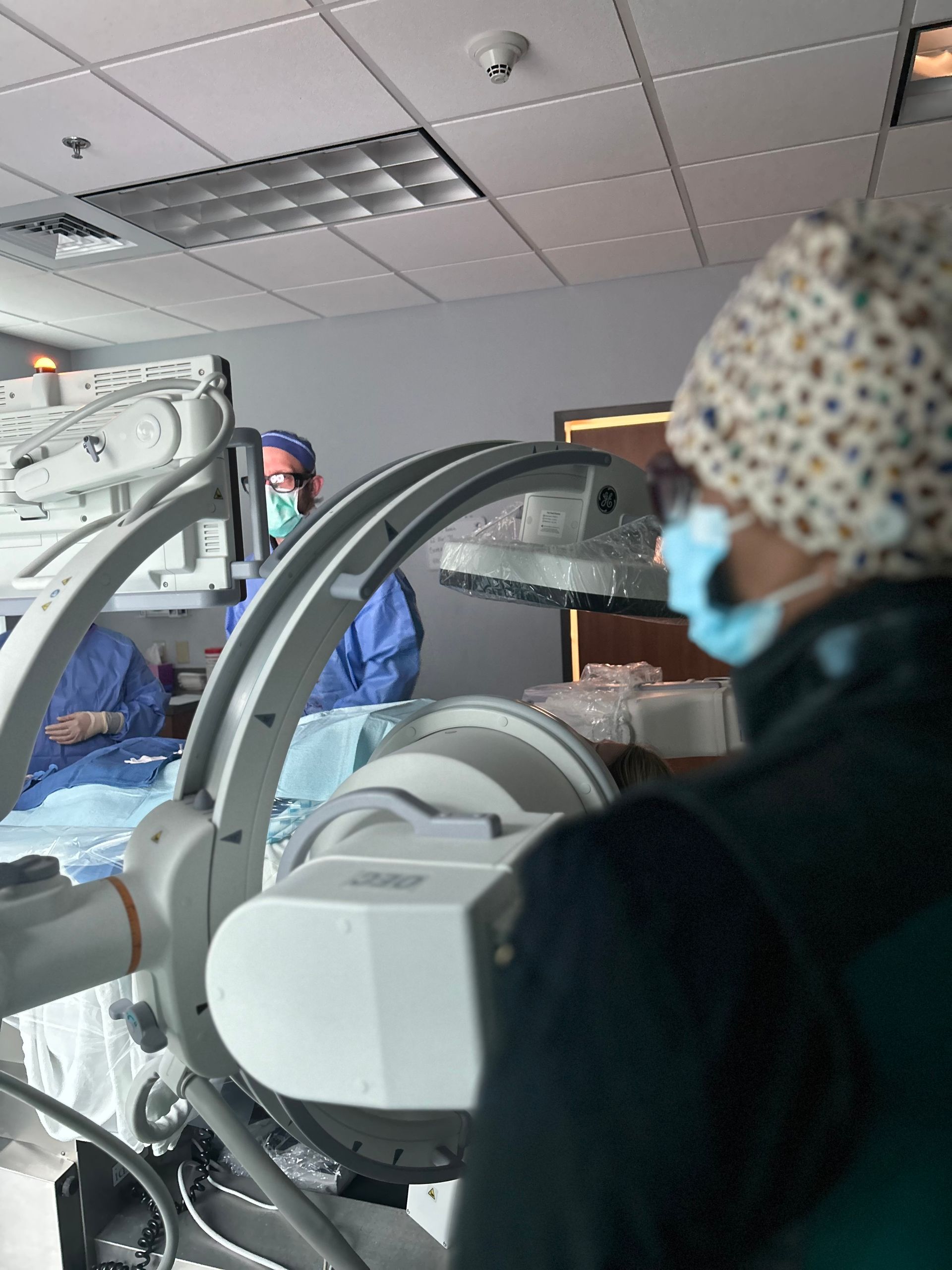
Uterine fibroid embolization blocks blood flow to fibroids so they shrink over time. A systematic review in Reproductive Sciences found that minimally invasive treatments, including embolization, improved fibroid symptoms and quality-of-life scores. Because shrinkage takes time, pressure symptoms often improve gradually rather than overnight. A clinician can discuss the expected timeline based on fibroid size and location.
More background about the procedure is available in the practice’s uterine fibroid treatment overview.
Frequently asked questions
Can fibroids make the abdomen look pregnant?
Fibroids can enlarge the uterus enough to create a rounded, pregnancy-like lower abdomen. Large, multiple, or outward-growing fibroids may be more likely to affect abdominal contour, although appearance does not reliably indicate their size or location. The change comes from uterine size and pressure; it is not proof of pregnancy or body-fat gain. Ultrasound can confirm what is creating the enlargement.
Can fibroids cause bloating?
Fibroids may contribute to persistent bloating when uterine enlargement causes pressure or constipation. If the bowel is compressed, constipation can add gas and fullness to the heaviness caused by the enlarged uterus. Because fibroid size does not change with meals, pressure may remain even when digestive swelling fluctuates. Fibroids may be contributing when lower-abdominal fullness occurs with pelvic pressure, heavy periods, constipation, or urinary frequency. Digestive conditions can coexist; evaluation is about identifying each contributor, not assuming the symptoms are imaginary or unrelated.
Will fibroid treatment flatten the abdomen?
Treatment can make the abdomen less prominent when an enlarged uterus is the main cause. The amount of change depends on the starting fibroid volume, how much the fibroids shrink or are removed, and whether another condition is adding to the bloating. A more realistic expectation is improvement in pressure, comfort, and how clothing fits—not a promised flat abdomen.
Medical Disclaimer
This article is educational only and does not replace medical advice, diagnosis, or treatment from a qualified clinician.